Thursday, April 18, 2013

High-Altitude Training: Fact vs. Fiction

Before we get to the article, about 3months ago I moved to >6,000ft of elevation from sea level.  I wanted to think that I would work hard to acclimate to

1. The change in air pressure (it's not a difference in O2 content, as is commonly thought).

2. The hILLs ;).  A simple road commute to work is a ~10miles run with almost a 1/2 mile of cumulative UP.  This is with start and stop points differing by a few hundred feet of elevation, so the rolling hills are what's doing it.  It's not just rolling, i can leave my house and run ~15miles and be at the top of pikes peak with a cumulative climb of 10,000'!

3. The god-send, aridness!  Being from the midatlantic, the concept of convective cooling is not in our vocabulary.  In order for sweat to cool you evapoartively, the atmosphere has to be able to be capable of taking on more water.  This is usually directly linked to the dew point.  Running in humidity is like growing a new limb.  A cool day you send vast amounts of blood to your working muscles.  In heat+humidity it's your skin that gets priority.  The biggest organ in my body (sorry Mrs Paleorunner, I mean my skin) needs the most blood first!

During this 3month process, there's been moving and a new job cutting into my training a bit.  But I finally had a chance to compare my fitness a little (albeit unscientifically).  I was in Florida for business and I thought, aha - more air pressure, NO hills I should blaze through a run.  Then, the heat+humidity had a different plan for me :).  But I was able to maintain a zone 2,3 run at my 6month ago marathon pace for ~7miles.  Good sign as it was relatively easy.  Then after 5 days in FL, back to colorado on the relatively flat trails behind my house.  Let's compare my performance. (same runner, same shoes, days apart, same relative perceived effort (RPE))
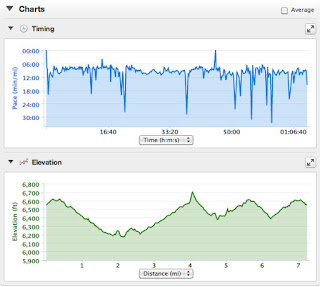
Colorado:
Distance: 7.45 miles
Pace: 9:41 / mile
Cumulative Elevation Ascent:  1600 feet
Temp/Humidity: 79 F / 23 %


Florida:
Distance: 8.61 miles
Pace: 7:19 / mile
Cumulative Elevation Ascent:  25 feet
Temp/Humidity: 82 F / 80 %


Heat is a big factor, but running uphill is bigger!  

Now on to the fact/fiction from Active.com:

Outdoors
Many athletes use altitude-training programs to enhance their physical performance. However, utilizing these concepts for fitness purposes can be a little tricky. Here are some of the common thoughts, right or wrong, regarding high-altitude training and how it can help or hurt you in your fitness pursuits.

Training at altitude is beneficial because the air is thinner.

FICTION
It’s not the lack of oxygen that makes your body work so hard at altitude. It really has to do with the barometric pressure. Even at 10,000 feet, there is still 29 percent oxygen in the air, and out of that 29 percent you only take in around 10 percent of the oxygen you breathe. The big challenge is your ability at altitude to extract the oxygen and get it into your bloodstream at altitude.

More
: The Effects of High-Altitude Training
At sea level, your body uses air pressure to its advantage. It allows all of the weight from the atmosphere to help push the air into your lungs, moving the air from an area of greater pressure to lower pressure.
The same happens at a cellular level, where the pressure then allows the air (including oxygen) to be pressed into your bloodstream.
When you work at a place that is higher than sea level, you start to experience less barometric pressure. Thus the air is not forced into the bloodstream as easily, making the body work harder.
Over time, the body will grow more red blood cells to help ease the struggle of getting oxygen. These cells help carry oxygen through the body, which will result in better fitness/sports performance.

Training at altitude will make me more fit.

FACT
Professional and Olympic athletes have known the benefits of altitude training for years. After all, there is an Olympic Training Center in Colorado Springs, Colorado, for a very good reason. If someone trains at altitude, they will see improvements in their maximal oxygen uptake (the ability to take oxygen in and move it into the blood stream), increased lactate threshold (the ability of the body to get over the “burn”), improved power output, and better sleep (which helps repair the body). These benefits are all a result of the red blood cell production caused by the adaptation to low-barometric pressure.

If I train with a mask that restricts airflow, it will simulate training at altitude.

FICTION
As stated before, the benefits of altitude training are not found from areas that lack oxygen, but from areas of lower-barometric pressure. Restricting airflow does not simulate training in altitude. In fact, training with reduced oxygen can cause serious problems like hyperventilation, disorientation, rapid heartbeat, elevated blood pressure and loss of consciousness.
Better use of altitude training would be sleeping in a hyperbaric tent. These tents create an enclosed, simulated altitude that allows the body to see results of altitude training while residing at sea level. These tents can be purchased or rented and assembled in your own bed. Some places offer hyperbaric chambers that you can visit for a fee. The “altitude” is adjusted slowly as the body adapts, and it has been proven to yield positive results.
Though air-restrictive masks may prove beneficial for some athletes whose sport requires working with low-oxygen levels, the masks pose danger to those using them to "get fit.”

If I train at altitude, then race at sea level, I’ll see better performance.

FACT
Well, this is a tricky one. Depending on the environment, it could backfire on you. If you spend time training in Colorado, which is high and very dry, then do a marathon in Florida, which is low and very wet; you may experience some problems because of the humidity. However, generally, you should see better times, strength and recovery if you train at altitude (or simulated altitude), and then perform at sea level.

If I train at sea level and plan to do a race in the mountains, then it’s probably a good idea to get there a few days early to prepare for the race.

FICTION
When you’re not accustomed to altitude, you have two choices: do the race immediately—within a day—or wait 7 to 10 days before racing. If you get to an event a couple of days before, your body has time to figure out that you are in a different environment, and then it will start making the necessary changes it needs to survive at altitude. Your body will become stressed, and then it will show in your performance.
If you do the event immediately, it will not have time to start adapting, and you should not see terrible challenges to your pulmonary system. If you get there 10 days ahead of time, your body will have plenty of time to fully acclimate.

Friday, April 12, 2013

The Roseto effect - know your neighbors


We're healthy people.  We concern ourselves with exercise, diet,... things we do to mimic our ancestor, take advantage of our adaptations.  But you can eat right and exercise, and run like the persistence hunters we evolved to be and STILL miss the boat.  

Healthy social aspects are needed for humans' longevity.  We are MORE community-oriented than you'd think.  In a time where noone knows their neighbors and people are sicker than ever (or require more medical intervention than ever).

The town of Roseta, PA had remarkably less non-infectious diseases and long life spans than any other neighboring towns with same diet and other factors.  Roseta had a social structure that mimicked ancestral cohesion and when that was gone, their mortality rates matched their PA peers.

From the piece:

This remarkable pattern suggests systematic differences between the two neighboring communities over the course of at least 30 years-years for which there are many indicators of greater social solidarity and homogeneity in Roseto and no evidence of differences in coronary risk factors.15 The social changes that occurred in Roseto in the 1960s are reflected in sharply increased rates of heart attack among men under the age of 65.

Executive Summary:  

The Roseto effect: a 50-year comparison of mortality rates.


OBJECTIVES. Earlier studies found striking differences in mortality from myocardial infarction between Roseto, a homogeneous Italian-American community in Pennsylvania, and other nearby towns between 1955 and 1965. These differences disappeared as Roseto became more "Americanized" in the 1960s. The present study extended the comparison over a longer period of time to test the hypothesis that the findings from this period were not due to random fluctuations in small communities. 

METHODS. We examined death certificates for Roseto and Bangor from 1935 to 1985. Age-standardized death rates and mortality ratios were computed for each decade. 

RESULTS. Rosetans had a lower mortality rate from myocardial infarction over the course of the first 30 years, but it rose to the level of Bangor's following a period of erosion of traditionally cohesive family and community relationships. This mortality-rate increase involved mainly younger Rosetan men and elderly women. 

CONCLUSIONS. The data confirmed the existence of consistent mortality differences between Roseto and Bangor during a time when there were many indicators of greater social solidarity and homogeneity in Roseto.

Sunday, April 7, 2013

First Real Run in B2R Trail Shoes


Using the new B2R Trail Shoes:
 photo 983D4EF4-AF3B-4B5A-B3DF-B46D330B0803-9413-000005F3D938B539_zps3aa34565.jpg
I see these peaks out of my kitchen window:  (peak on the left index finger, smaller summit with a house on it, then the top of the Incline Trail.)
 photo FA408E19-5A6A-4C48-9FBC-04380B10D7FD-9454-000005F4ADE2693E_zps77dfab5d.jpg

So I make it up to that First Peak: (looking down at my house)


Then I run to that house on the shorter peak.  Most of the time I feel like i'm following a trail, but I keep losing it.  I eventually end up on a driveway, I zig zag that dirt road for a while, finally just bound / bushwhack down a loose gravel/dirt hill, run on a paved road until I find another dirt trail!  Then I head to a geometrical shape I see on a neighboring peak.  Looks like a pill box or something.  Along the way I find a lantern, seems old.  The 'pill box' turns out to be a torn down house's foundation.  And after visiting it, I see it's the 'end' of the red mountain trail.


The shoes did GREAT.  I have not taken them through water crossings yet.  but the way the dust sifts through, you can tell they will drain quickly (and therefore dry quickly).

 photo 8A676C11-5317-4587-9E42-166392DB150E-9454-000005F486931951_zps6eaaaca5.jpg

I did have to stop a couple times to pull out cactus needles from my foot.

Sunday, March 31, 2013

Members of Gaited Community, Jason P.


I notice that we always get stories (and books) about the most elite athletes, but how many of us middle-of-the-packers can relate to their stories.  For example, Scott Jurek's stories about running in the dark during an ultra with your headlamp off to sneak up on the runner you want to pass - then at the last moment turning on your light and blaze past so you can crush their spirits.  To most of us, the leaders are in a different orbit.  Most of us are chipping away at our personal bests and deriving much pleasure in the process.  This led me to ask some runners I admire to answer a few interview-style questions.  Their stories will hopefully inspire others as they have inspired me!

Cheers to our first member of the Gaited Community.  I met Jason (featured below) on the DC Metro at 5:30am en route to my first marathon.  I was totally unprepared and about to hurt myself.  Jason seemed so calm and ready to (actually) race it!  He talked me into going with coaching to get better prepared.  I owe him big time for that, and introducing me to 'Born To Run's Eric Orton (www.runningwitheric.com).  A few years ago, Jason started out with >2hour half marathon - got stronger, faster, smarter - today he's preparing for the 2013 Boston Marathon, where he'll likely break 3hours (sub 7 min/ mile for 26.2 miles!).  

*Note, I've been chasing him for a while, I frequently joke that me getting faster/better helps encourage him to improve.  Well, something's working!  GO Jason!!

> Why did you start running?
About 2005, I started running because I needed to lose weight. I had run very little growing up or playing any sports. I was 190 lbs and I needed to do something about that. I did very little running and signed up for my first 5k, Washington DC's race for the cure. I remember running for 15 minutes max at a time and never doing more than 3 days a week. I ran that race and expected to run with 10 min per mile pace. I ended up running my first 5k at 25:55 at an 8:20 pace much faster than I thought. I loved it. I loved running with people, I loved the competition and I loved pushing myself. The very next day, I signed up for the Baltimore half marathon and pieced together a training plan from runner’s world. I loved running but didn’t really begin doing it daily until the winter of 2005. When a personal situation forced me to reevaluate my life, I began running daily. I lost weight and started getting faster. My first marathon was in 2006 and since not a year has gone by without at least a marathon.  
> What were your first runs like?
Horrible. I hated it. I had old new balance shoes that I bought for fashion and ran in. I had no idea what shoes to buy, how fast to run, or what to run in. I ran in army fatigue cut offs and cotton t shirts.  I sweated so much, I had no idea what to do. But when I raced, it felt so freeing.
> What was your most memorable run so far and why?
JFK 50. Until this race, I had never believed in the runners high. But at mile 42 I was so happy and delirious. I was slapping people’s backs and yelling that we were going to finish. I had no idea how I was going to do and to finish in the top 100 was a big deal for me.
>Note, top 100 is better than 10% finisher.  That is the oldest, biggest Ultra in the country, so that's saying something!!  


> Do you do other fitness related activity? If so, what?
I do core. I enjoy biking, canoeing and hiking. If I could kayak everyday, I would. I enjoyed rock climbing in the past, but I rarely do anything besides run.
> What has kept you running?
Love. I truly believe it is the only sport that I practice every day and see growth. I love because I need no equipment besides my body and shoes. I don’t need a weight or a bike. It is all about me.
> What is your next running goal or milestone?
Run a sub 3 marathon. Finish a 100 miler. Become more efficient trail runner.
> Have you seen any improvement to your health that can be attributed to running? If so, please explain.
Lowering of my HR and weight.
> What has been your worst running experience so far?
Just feeling the doubt of myself. I have run races where I start doubting myself and my ability. This has led to some bad races and a few DNFs. I regret those but I am glad to have learned.
> What advice do you have for new runners?
Don’t believe that every run needs to be run at a break neck speed. In fact, run slow at first. Force yourself to run slow. If not, it will not be fun or enjoyable. Also remember that you need to be consistent and patient with running. The more consistent you are the less likely running injuries will occur.

Any questions for Jason?  (I pick his brain all the time).  He works as an educator and Cross Country Coach.

-PR

Wednesday, March 27, 2013

Why People Love The Paleo Diet


Personal Theories On Why People Love The Paleo Diet


paleo diet
Have you been following the Paleo diet’s massive success? It’s charted over on Buzzfeed, and it has apparently crushed diets like “gluten free” or “atkins” or “being vegan which I know is not really a diet, I know that” in popularity. The only thing that remains more popular is cupcakes. The diet dictates that you should eat the food eaten by our cavemen ancestors. Their website states:
These foods include fresh meats (preferably grass-produced or free-ranging beef, pork, lamb, poultry, and game meat, if you can get it), fish, seafood, fresh fruits, vegetables, seeds, nuts, and healthful oils (olive, coconut, avocado, macadamia, walnut and flaxseed). Dairy products, cereal grains, legumes, refined sugars and processed foods were not part of our ancestral menu.
I’ve been speculating on why this is so appealing to people, and this is what I’ve got.


Read more: http://www.thegloss.com/2013/03/26/beauty/love-paleo-diet/#ixzz2OlDGp5ws

Saturday, February 9, 2013

Vibram Five Fingers vs. SoftStar Runamocs


Minimalist Shoes Revisited: Showdown: Vibram Five Fingers vs. SoftStar Runamocs

June 28th, 2010 · 30 Comments · Self Experimentation, Travel, Fun & Lifestyle

Alright. Here's just the video. And here's Mark Sisson's Link Love mention that resulted in a few...uh...defensive comments here and there. That's cool. The video is intended to help. And here's the post that started it all: Out with the Vibram Five Fingers and in with the Soft Star RunAmoc.

Minimalist Shoes Revisited from Richard Nikoley on Vimeo.


Wednesday, January 30, 2013

Are You Ready to Go Minimal?

Jay Dicharry the author of:
  

Weighs in on criteria conditions needed to try out minimal shoes using mobility test (with nice fixes to improve), muscle isolation, leg-stance balance, posture alignment.  It's a great 7mins, if you dig his stuff, buy the book for more.


Note... Even after practice, I can NOT stand on one foot with my eyes closed, I tip over as if pushed!  Let me know if you can do it!

Sunday, January 6, 2013

How to Breathe


How to Breathe?  First we talk about 'how to run' which is arguably VERY natural to humans, now how to breathe??

Consider this; a common question at the gym.  People ask 'am I just out of shape or is there a trick to breathing??'.  It is easy to dismiss such questions as 'just work harder, adapt, get fitter' but there are interesting nuances to consider.  Our bodies can recognize that we're working hard (say, during a work out) so let's increase the flow of oxygen!  A simple mechanism is to just breathe faster, but that is not always the best solution to adapt to a serious fitness demand we're placing on our bodies.  For example a measure of fitness is the VO2Max is a measure of when (given a constantly increase in effort-level) does one exhale perfectly good oxygen.  In other words, our trigger to breathe faster usurps our ability to USE the oxygen we are taking in.

Many of us are training their bodies to be fit, but there are also techniques to train our lungs to work better.   Two take ways in my research is to:

a.)breathe deeper
b.)breathe smarter

Deeper is simple to understand, when you feel like you can't get enough air, take a moment to slow your breathe's cadence and increase the depth of breathes.  Try it at as you read this, breathe deep, then try to breathe deep using your mouth.  There are benefits to using those deeper air sacs and like many skills if you consciously do it eventually you'll naturally do it!  Also play with this, experiment when in your 'zone' - how many steps (while running) do you take per breathe?  Doing burps? Give yourself the luxury of a deep breath per rep.  Make a breath what you're heading for, your milestone to reach. Say 'breath breath breath' to yourself when in a high intensity workout!

Breathing smarter is a funny way i like to say - use your breathing muscles the way they were intended.  Use your belly to breathe!  Here is a test, are you a belly or a chest breather:

You can test whether you are a chest breather or stomach breather. Place your right hand on your chest, and your left hand on your stomach and breath normally. If your right hand rise more, you are a chest breather, and if your left hand rises more, you are a stomach breather.  (By Ollie Lawson)

The stomach obviously can expand MUCH further and is therefore a better group of muscles to take in air.  I always joke with my running seminars that my race pics look ridiculous because my stomach is usually distended.  It is worth the unflattering pictures to have enough air.  

Master this, then you have no excuses ;)


Saturday, January 5, 2013

Overuse Injuries


Oh how i enjoy taking two sides of an issue to see which explanation is the more supportable (it's a science thing).  Sometimes the counterintuitive explanation is the correct one.  Knowing this, and knowing 'words have meaning' - we enjoy picking apart words, diagnoses, explanations, etc…

We can't help but chuckle when hear the term "overuse injury" used to 'describe' running injuries.  In googling it (in quotes) gives you about 83,500 results.  The top 3 are definitions.  

sportsmedicine.about.com  Definition: Chronic pain and injury refers to the sort of physical injury, ... are sometimes referred to as cumulative trauma or overuse injuries. 
emedicine.medscape.com  Overuse injuries, otherwise known as cumulative trauma disorders, are described as tissue damage that results from repetitive demand over the course of time. The term refers to a vast array of diagnoses, including occupational, recreational, and habitual activities. 
http://medical-dictionary.thefreedictionary.com/ Overuse injury
Sports medicine A sports- or occupation-related injury that involve repetitive submaximal loading of a particular musculoskeletal unit, resulting in changes due to fatigue of tendons or inflammation of surrounding tissues; OIs include tennis elbow and golf elbow. 

From emedicine: "cumulative trauma" sounds more like blows from a hammer than feet landing on the ground doing something as natural as running.  We assumed these definitions might be silly because it is so common to describe running as feet slamming on the ground, or pounding the pavement.  But obviously, some of us realize running has been with humans for millions of years - an adaptation used to survive.  Running is as natural to humans as breathing, or the muscles used to balance or stand; or having a beating heart.  These are muscle contraction too and not likely to hurt or be sore due to 'overuse'.

If you've been running non-stop since childhood with a form that is natural to the variable compliances of the muscles and tendons at your natural cadence with appropriate protection yet proprioception- we DOUBT seriously that you'll have an injury from overuse!!  It's more aptly an issue of underuse.

An explanation or diagnosis of an injury, condition, whatever must have the distinction between proximal cause, ultimate cause, fundamental cause.  There are chains of causes some proximal, some ultimate.  Some medical professionals have fancy terms for things that nothing more than a regurgitation of the symptoms.  " i have pain in my foot arch"  "oh you have plantar fasciitis"   which is what you said to them!  

Example: 
I am hurt due to an inflammation of a tendon, that's proximate.  The tendon is inflamed because of a muscle imbalance, that's an ultimate cause.  There is a muscle imbalance because of a form issue, biomechanics, leg length discrepancy, neuromuscular disconnect, or simply NO feedback mechanism of your bad form due to your overly cushioned shoes.  
Think about it, and don't settle for lame diagnoses.  

Friday, December 21, 2012

Bugs, The New Beef??


Would you do it?  Maybe in a smoothy?  "eat them eat them, here they are"


Mealworms: The Next High-Protein Food Source?

While beetle larvae may not seem appetizing, study finds they're more environmentally friendly than livestock

December 21, 2012 RSS Feed Print
FRIDAY, Dec. 21 (HealthDay News) -- They'll never replace the traditional Christmas ham, but mealworms (beetle larvae) may someday offer an environmentally friendly alternative to meat, a new study suggests.

Researchers in the Netherlands used three factors -- land usage, energy needs and greenhouse gas emissions -- to compare the environmental impact of mealworm farms to chicken, pork, beef or milk farms.
Compared to the other types of farming, mealworm farming produced more edible protein using the same amount of land and less energy, according to the study in the journal PLoS One.
The same team of researchers previously found that mealworms produce less greenhouse gases than other meat-producing animals.
"Since the population of our planet keeps growing, and the amount of land on this earth is limited, a more efficient, and more sustainable system of food production is needed," study author Dennis Oonincx, of the University of Wageningen, said in a journal news release.
"Now, for the first time it has been shown that mealworms, and possibly other edible insects, can aid in achieving such a system," he added.
More information
The University of Arizona has more about mealworms.
Copyright © 2012 HealthDay. All rights reserved.

Sunday, November 25, 2012

Footwear Trends: Should Sport & Fitness Enthusiasts Embrace the Minimalist Movement?


Link Here:


Footwear Trends: Should Sport & Fitness Enthusiasts Embrace the Minimalist Movement?

ISSN: 1543-9518


ABSTRACT

The popularity of the barefoot movement in sports and fitness activities has soared within the past few years as evidenced by a growing community of minimalist
footwear enthusiasts wearing the ‘glove’ shoes in their sporting endeavors, fitness workouts, and everyday leisure activities. This emergence
of the minimalist shoes, such as the Nike Free© and Vibram FiveFingers®, has created a wave of intrigue for those sport and fitness enthusiasts wanting
a natural running experience without being subjected to the hazards of the road. Whether running barefoot, in shoes or in minimal footwear, the trends in footwear
preference have caused much debate between researchers as to which form causes more injuries and/or best serves to enhance athletic performance. As sport and
fitness professionals, it is important to thoroughly examine the current footwear trends to develop a ‘best practices’ approach for advising our athletes
and clients.
Click above link for entire article.  It is a great summary of minimalist footwear.

Wednesday, October 31, 2012

Kentucky cows chow down on candy


Even the tax-payers subsidizing corn isn't a good enough deal for factory farmers.  Since we are what we eat AND we are what we eat eats - what be less nutritional than corn fed cattle?  How about candy-fed cattle?

NEW YORK (CNNMoney) -- Cattle farmers struggling with record corn prices are feeding their cows candy instead.
That's right, candy. Cows are being fed chocolate bars, gummy worms, ice cream sprinkles, marshmallows, bits of hard candy and even powdered hot chocolate mix, according to cattle farmers, bovine nutritionists and commodities dealers.

"It has been a practice going on for decades and is a very good way to for producers to reduce feed cost, and to provide less expensive food for consumers," said Ki Fanning, a livestock nutritionist with Great Plains Livestock Consulting, Inc. in Eagle, Neb.

Feeding candy to cows has become a more popular practice in tandem with the rising price of corn, which has doubled since 2009, fueled by government-subsidized demand for ethanol and this year's drought. Thrifty and resourceful farmers are tapping into the obscure market for cast-off food ingredients. Cut-rate byproducts of dubious value for human consumption seem to make fine fodder for cows. While corn goes for about $315 a ton, ice-cream sprinkles can be had for as little as $160 a ton.

"As the price of corn has climbed, farmers either sold off their pigs and cattle, or they found alternative feeds," said Mike Yoder, a dairy farmer in Middlebury, Ind. He feeds his 400 cows bits of candy, hot chocolate mix, crumbled cookies, breakfast cereal, trail mix, dried cranberries, orange peelings and ice cream sprinkles, which are blended into more traditional forms of feed, like hay.

The farmer said that he goes over the feed menu every couple of weeks with a livestock nutritionist who advised him to cap the candy at 3% of a cow's diet. He said that the sugar in ice cream sprinkles seems to increase milk production by three pounds per cow per day.

Sugar also helps to fatten up beef cattle, according to livestock nutritionist Chuck Hurst, owner of Nutritech, Inc., in Carmen, Idaho, without any ill effects to the cow, or to the person consuming its meat or milk. He said that it's the sugar in the candy that's important, and that it provides "the same kind of energy as corn."

He added that farmers feed their cows a wide assortment of byproducts beyond candy to save money.

"One guy in Montana bought a whole carload of soda crackers as feed," he said. "He had to hire a guy to open all the boxes of soda crackers."

Yoder and other farmers buy their feed from brokers like Midwest Ingredients, Inc., of Princeville, Ill., which offers a wide assortment of byproducts, including cherry juice, fish meal, peanut butter, fruit fillings, tapioca and left-over grain from distilleries.

"The buyers of corn, or feed in general, are paying a lot of money so they're definitely out there shopping around looking for cheaper stuff," said Eric Johnson of Eagan, Minn., who owns MidWest Feed Ingredient Trading. "People are price conscious and they're resourceful. Stuff comes up and they hunt it down and try to save a little bit of money."

But there is a catch -- as the demand for candy-feed goes up, so does the price. Yoder said that he has become "more aggressive in bidding for [candy-feed] because of the high price of corn." But he added that the candy "started getting expensive because other people want it too."

Yoder said he's seen the price of sprinkles rise from $160 per ton -- which was about half the price of corn -- to about $240. But he still buys the candy.

"Any time I can make a change to save two cents or three cents a cow, that makes a difference," said Yoder. "Farming is a game of inches sometimes, or half-inches. Every little penny you can find to save, you do." 
<< no mention of nutritional value for the consumers of the cows>>

Thursday, October 18, 2012

Mediterranean and low-carb diets can give lasting health benefits


Mediterranean and low-carb diets can give lasting health benefits
Last Updated: Friday, October 12, 2012,15:21

Mediterranean and low-carb diets can give lasting health benefits
Washington: Mediterranean and low-carbohydrate diets have long-lasting positive effects even with partial weight regain, according to a follow-up study by researchers from Ben-Gurion University of the Negev (BGU) and Israel’s Nuclear Research Center.

The results were published as an update to the landmark study, the workplace-based Dietary Intervention Randomized Controlled Trial (DIRECT), a tightly controlled 24-month dietary intervention.

“Our follow-up subsequent data shows lasting, positive effects of Mediterranean and low-carbohydrate diets six years later,” said Dr. Dan Schwarzfuchs from the Nuclear Research Center Negev in Dimona, Israel,

The results suggest that the lipid profile (lower cholesterol, triglycerides and arteriosclerosis) improved for the long term, regardless of partial regain.
“Data from trials comparing the effectiveness of weight-loss diets are frequently limited to the intervention period,” explained BGU Prof. Iris Shai.

Overall six-year weight loss was significantly lower from baseline for Mediterranean and low-carbohydrate diets, but not for the low-fat group.

In the four-year post-intervention, participants regained nearly six pounds. Total weight change for the entire six-year period was approximately -7 lbs. for the Mediterranean diet and -3.7 lbs. for the low-carbohydrate diet.

After four years post-intervention, more than two-thirds (67 percent) of the DIRECT participants had continued with their original assigned diet, 11 percent switched to another diet and 22 percent were not dieting at all.
The researchers also found that after six years, the HDL/LDL ratio remained significantly lower only in the low-carbohydrate diet. Triglyceride levels remained significantly lower in the Mediterranean and low-carbohydrate diets. Overall, total cholesterol levels remained persistently and significantly lower in all diet groups as compared to baseline.
In the original study, 322 moderately obese subjects were randomly assigned to one of three diets: low-fat; restricted-calorie; Mediterranean; or low-carbohydrate, non-restricted-calorie, and were provided colour-labelled food per diet daily in the workplace cafeteria.

The two-year adherence rate was 85 percent. The results suggested beneficial metabolic effects to low-carb and Mediterranean diets
. Moreover, the researchers found a significant diet-induced regression in the carotid vessel wall volume across all diet groups. This change was mainly dependent on diet-induced reduction of blood pressure.
“This breakthrough, even years later, continues to yield valuable information that can help every one of us make healthier diet choices,” said Doron Krakow, executive vice president of American Associates, Ben-Gurion University of the Negev.

“It is another example of BGU and Israeli researchers, thanks to generous funding by the Atkins foundation, improving the quality of our lives,” Krakow added.

The results were published in a peer-reviewed letter in the current New England Journal of Medicine (NEJM).

Monday, October 15, 2012

Improve Your Stride Without Trying

By Matt Fitzgerald
Here are four training methods:
Giant Walking Lunge
Fast running requires good hip mobility. You need to dynamically achieve a high degree of hip flexion and extension to take the large strides that speed requires. The giant walking lunge is an effective exercise to develop hip mobility. To do it, simply walk forward slowly by taking the largest strides you can and lowering the knee of the trailing leg to within an inch of the floor on each stride. Focus on reaching out ahead of your body as far as you can with the striding leg. Complete 10 lunges with each leg, alternating the striding leg as you would with normal walking.
Hip Flexor Stretch
Kneel on your right knee and place your left foot on the floor well in front of your body.  Draw your navel towards your spine and roll your pelvis backward.  Now put your weight forward into the lunge until you feel a good stretch in your right hip flexors (located where your thigh joins your pelvis).  You can enhance the stretch by raising your right arm over your head and actively reaching towards the ceiling.  Hold the stretch for 20 seconds and then repeat on the left side.
Single-Leg Running
Studies have shown that plyometrics training (or jumping drills) improves running economy by reducing ground contact time and increasing the capacity of the legs to capture and reuse energy absorbed through impact. Few runners care to make time to add plyometrics workouts to their training regimen. But you don’t have to. Instead, incorporate some single-leg running into one or two of the runs you’re already doing every week. Start by running on just your right leg for 10 strides and then on just your left leg for 10 strides. Gradually increase the number of strides you do on each leg until you reach 30 strides per leg. You will notice that it gets easier to go longer on one leg, which is a sign that your legs are adapting to the stress and your stride is becoming more efficient.
Steep Hill Sprints
If you have never done a steep hill sprint before, you should not leap into a set of 10 of steep hill sprints the very first time you try them.  These efforts place a tremendous stress on the muscles and connective tissues.  Thus, the careless beginner is at some risk of suffering a muscle or tendon strain or another such acute injury when performing steep hill sprints.  Once your legs have adapted to the stress they impose, steep hill sprints actually protect against injury.  But you must proceed with caution until you get over the hump of those early adaptations.
Your very first session, performed after completion of an easy run, should consist of just one or two 8-second sprints on a steep incline of approximately six percent.  If you don’t know what a six-percent gradient looks or feels like, get on a treadmill and adjust the incline to six percent.  Then find a hill that matches it.
Your first session will stimulate physiological adaptations that serve to better protect your muscles and connective tissues from damage in your next session.  Known to exercise scientists as the “repeated bout effect,” these adaptations occur very quickly.  If you do your first steep hill sprints on a Monday, you will be ready to do another session by Thursday—and you will almost certainly experience less muscle soreness after this second session.
Thanks to the repeated bout effect, you can increase your steep hill sprint training fairly rapidly and thereby develop strength and stride power quickly.  First, increase the number of eight-second sprints you perform by two per session per week.  Once you’re doing eight to 10 sprints, move to 10-second sprints and a steeper, eight-percent hill.  After a few more weeks, advance to 12-second sprints on a 10-percent hill.  Always allow yourself the opportunity to recovery fully between individual sprints within a session.  In other words, rest long enough so that you are able to cover just as much distance in the next sprint as you did in the previous one.  Simply walking back down the hill you just ran up should do the trick, but if you need more time, take it.
Most runners will achieve as much strength and power improvement as they can get by doing 10 to 12 hill sprints of 12 seconds each, twice a week.  Once you have reached this level and have stopped gaining strength and power, you can cut back to one set of 10 to 12 hill sprints per week.  This level of maximum power training will suffice to maintain your gains through the remainder of the training cycle.

Thursday, October 4, 2012

Gut Flora and the Modern Western Diet


Easier isn't necessarily better.  I frequently 'dish out' the advice: "I'd avoid that because it's too easy to digest".  I use the analogy would you choose a college based on how easy it is?  Working for things yields better results.  This is true for food selections as well.  All the processing of grains, sugars, and even processed protein sources have smaller surface area and are digested sooner in the gut than nature intended.  


Below is a great technical explanation of this phenomenon Link here


Gut microbiota, immune development and function.

Source

Division of Surgery & Interventional Science, University College London, 4th floor, 74 Huntley Street, London WC1E 6AU, United Kingdom. Electronic address: stig@bengmark.se.

Abstract

The microbiota of Westerners is significantly reduced in comparison to rural individuals living a similar lifestyle to our Paleolithic forefathers but also to that of other free-living primates such as the chimpanzee. The great majority of ingredients in the industrially produced foods consumed in the West are absorbed in the upper part of small intestine and thus of limited benifit to the microbiota. Lack of proper nutrition for microbiota is a major factor under-pinning dysfunctional microbiota, dysbiosis, chronically elevated inflammation, and the production and leakage of endotoxins through the various tissue barriers. Furthermore, the over comsumption of insulinogenic foods and proteotoxins, such as advanced glycation and lipoxidation molecules, gluten and zein, and a reduced intake of fruit and vegetables, are key factors behind the commonly observed elevated inflammation and the endemic of obesity and chronic diseases, factors which are also likely to be detrimental to microbiota. As a consequence of this lifestyle and the associated eating habits, most barriers, including the gut, the airways, the skin, the oral cavity, the vagina, the placenta, the blood-brain barrier, etc., are increasingly permeable. Attempts to recondition these barriers through the use of so called 'probiotics', normally applied to the gut, are rarely successful, and sometimes fail, as they are usually applied as adjunctive treatments, e.g. in parallel with heavy pharmaceutical treatment, not rarely consisting in antibiotics and chemotherapy. It is increasingly observed that the majority of pharmaceutical drugs, even those believed to have minimal adverse effects, such as proton pump inhibitors and anti-hypertensives, in fact adversely affect immune development and functions and are most likely also deleterious to microbiota. Equally, it appears that probiotic treatment is not campatable with pharmacological treatments. Eco-biological treatments, with plant-derived substances, or phytochemicals, e.g. curcumin and resveratrol, and pre-, pro- and syn-biotics offers similar effects as use of biologicals, although milder but also free from adverse effects. Such treatments should be tried as alternative therapies; mainly, to begin with, for disease prevention but also in early cases of chronic diseases. Pharmaceutical treatment has, thus far, failed to inhibit the tsunami of endemic diseases spreading around the world, and no new tools are in sight. Dramatic alterations, in direction of a paleolithic-like lifestyle and food habits, seem to be the only alternatives with the potential to control the present escalating crisis. The present review focuses on human studies, especially those of clinical relevance.
Copyright © 2012. Published by Elsevier Ltd.

Tuesday, October 2, 2012

Running Strong–With Shorter Stride

((We have spoke about cadence before: http://paleorunners.blogspot.com/2012/07/take-control-of-your-cadence.html))

Harvard Prof. Dan Lieberman Running Strong–With Shorter Stride


He told me a story about Harvard Business School professor Paul Gompers, who I had written about for Runner's World in early 1988 when Gompers was a physiology student in Oxford, England. That spring, Gompers finished fourth in the U.S. Olympic Marathon Trials in New Jersey, and had a lifetime best of 2:11:38. He quit competitive running four or five years later, and apparently has had knee problems in recent years.
"Paul was a terrible over strider, so I brought him into the lab and showed him how his impact forces changed when he switched to a forefoot strike," said Lieberman. "He made the transition smoothly, and now he's running healthy again."
After three or four years in the middle of the barefoot/minimalist running debate, Lieberman says he’s disgusted with the low quality of the discussion. “I don’t think there's anything wrong or magical about a heel strike or a forefoot strike,” he says. “We’re just trying to gather information, and we’re always careful to explain the limits of the data we have. But others rush in and jump to unsupported conclusions. Everyone wants a simple answer. Sorry, but the answers aren’t simple.”

Sunday, September 30, 2012

Training Volume Is It THAT Simple?


Is it as simple as time training = better performance.  if you're a part time runner, you'll just have to live with part time performance?  

Big races coming in this area and it's got me 'athinking.  'Training volume' is it an aggregate indicator of how you finish in a race?  Picture this: The army 10-mile'r about 20-25,000 finishers.  Imagine the finish in a single file line.  Could you take a picture of them in single file and draw a circle around each group of 100 runners and write the average training miles (or weekly time invested) next to each group and see a definite trend of training volume to finishing times?  Is it as simple as finishers 1-101 trained 'xxhours/week, the next hundred averaged xx-1 hours/week, and so on?  Maybe the 10-miler is too short to see a definite trend, how about a big city marathon, or an ultra (like Comrades)?

This is easily true at the extremes.  Those that plan to walk these races probably have zero to 'a couple miles' a week under their belts - and those finishing at the top logged up to 100s of miles a week.  I'm generalizing here, many athletes have differing histories of volume, better/worse genetics, etc etc.  but could logging miles be the 'key' in endurance sports?  

I found this helpful study on finishers of the Comrades Ultra (Link Here).  Form the piece:
Those with the fastest times (6 to 6.5 hrs) had done 2574km (1600miles) and the 10 to 11 hrs finishers 1030km (640mi) <<miles done in the 6mos leading up to the race>>. The current elite runners claim to run in excess of 3000 to 3500 km (1864-2174mi) in preparation for the marathon, which is similar to what runners were doing twenty years ago.
 …<also note>Despite their high training load the male silver medallists were the least likely to have spent a week off due to injury and illness (28.6%) - but then the corollary is that this would have allowed them to complete a higher total mileage.  The majority of the men who finished in over 10 and over 11 hours (76% and 58% respectively) had been unable to train due to injury or illness.  Likewise, the women who finished in under 9 hrs had the least compromised training (15.1% were unable to train for a week or more) while up to 50% of the women in all the other medal groups had been affected.  Six of the seven women who did not finish had been ill and/or injured and their total training mileage was lower than any other group in the study.
In table form, years of experience running, and training volume in the 6mos leading up until the race.

Image and video hosting by TinyPic Image and video hosting by TinyPic

Training volume equals performance and training volume equals less injury rates.  If you're competitive, it is your job to accept how much time you have to train and that is most likely to determine how you race (or be injured ...more on this later!).  

Friday, September 28, 2012

The Dreaded Side Stitch

Depends largely on intensity of activity, but you've only got so much blood to go around.  If your legs want blood to move, you'll turn off other less important bodily functions. In our ancestral past, running meant surviving, so yeah it's ranked high on the priority list - higher than digestion.  Want a cramp in your side?  Make sure and eat/drink just before running ;).

From Trail Runner Magazine:
GOT CRAMPS?Avoid Painful race- and training-ending muscle spasmsBY Jason R. Karp, Ph.D
In high school, I was leading a cross-country race, with a pack of runners from another school right off my shoulder. I felt confident, and then with 800 meters to go, a cramp seized my calf. I stuttered for a few steps, and the entire pack flew by me as if I were standing still.
 
Have you ever been running along enjoying a trail’s scenery, the smell of tall pines or eucalyptus and BAM—you get a nasty cramp? Whether it is a sharp stitch in the side of your abdomen or a sudden, piercing tightness in your calf or hamstring, cramps can downright destroy an otherwise great run. But they don’t have to if you understand how to deal with (and avoid) them.
Why Do You Get Cramps?
 
Side stitches affect nearly 70 percent of runners, typically occur on the right side of the upper abdomen and are less prevalent in both older and fitter runners. Why cramps occur, though, is still somewhat of a mystery to physiologists and doctors. Scientists believe that side stitches, which are given the fancy name of exercise-related transient abdominal pain (ETAP), result from either eating or drinking too close to running, especially food and drink that has a high sugar content, or from the movement of internal organs inside the abdominal walls, causing their connective tissue to pull on the diaphragm, which moves with breathing. 
While many runners believe that muscle cramps are caused by dehydration and/or an electrolyte imbalance, which could theoretically affect a muscle’s ability to contract, research has shown that neither is the cause. Drinking a sports drink on your long trail runs, while helpful to maintain hydration, won’t prevent cramping. … Read More