Summary: “After controlling for covariates, participants (86 of 210 feet) with hamstring tightness were 8.7 times as likely to experience plantar fasciitis (p < .0001) as participants without hamstring tightness. Patients with a BMI >35 were 2.4 times as likely as those with a BMI <35 to have plantar fasciitis.”
Stretching out plantar fasciitis

www.shutterstock.com #6522286
By Katie Bell
Tight hamstrings play an important role in plantar fasciitis, according to a study published in the June issue of Foot and Ankle Specialist.
“These findings show that while we always consider the tightness of the gastrocnemius/soleus complex and the subsequent restricted ankle motion from this equinus, we also need to consider the role of the hamstrings,” said Jonathan Labovitz, DPM, lead author and associate professor at Western University of Health Sciences, Pomona, CA.
The prospective cohort study included 105 participants (210 feet); 79 had plantar fasciitis, which researchers assessed with palpation, who measured popliteal angle with a tractograph and diagnosed hamstring tightness when the popliteal angle ≤160°.
Without controlling for covariates, body mass index (BMI), tightness in the hamstring, gastrocnemius/soleus, and gastrocnemius, and the presence of a calcaneal spur all had statistically significant associations with plantar fasciitis.
After controlling for covariates, participants (86 of 210 feet) with hamstring tightness were 8.7 times as likely to experience plantar fasciitis (p < .0001) as participants without hamstring tightness. Patients with a BMI >35 were 2.4 times as likely as those with a BMI <35 to have plantar fasciitis.
Researchers at Cappagh Orthopedic Hospital in Dublin, Ireland, first linked hamstring tightness with plantar fasciitis in a study published in the December 2005 issue of Foot & Ankle International. The Western University researchers now suggest that an increase in hamstring tightness may induce prolonged forefoot loading and, through the windlass mechanism, may be a factor that increases repetitive plantar fascia injury.
Triceps surae tightness was not included in the Western University covariate analysis, raising the possibility that hamstring tightness was not actually the cause of plantar fasciitis in patients wth tightness in both areas.
“People who have tight hamstrings are more than likely going to have a tight triceps surae,” said Michael T. Gross, PT, PhD, a professor in the Division of Physical Therapy at the University of North Carolina in Chapel Hill. “The investigators of this study admitted that 96% of subjects who had tight hamstrings also had tight triceps surae. Now there’s a cause and effect. If you can’t get dorsiflexion at your talo-crural joint, this often drives dorsiflexion at other joints and that is going to cause collapse of the longitudinal arch of the foot, loading the plantar fascia with increased tensile stress.”
In people with hamstring and triceps surae tightness and plantar fasciitis it’s not known whether the ankle equinus from a tight triceps surae causes hamstring tightness or vice versa, Labovitz said.
“There is no question that the tightness of the triceps surae will cause flattening of the arch and increase tensile stress on the plantar fascia,” Labovitz said. “The question becomes, are the hamstrings involved in this and, if so, to what effect?”
The timing of plantar fascia loading and hip kinematics during gait raise additional questions about possible hamstring involvement, Gross said.
“When loading is taking place at the plantar fascia, it’s mid to late stance. At mid to late stance, the hip is in extension and even hyperextension. Even though the knee is extended, extension/hyperextension at the hip will limit the amount of passive tension that could be developed in the hamstrings, so it is a mystery to me how tight hamstrings would cause trouble for the plantar fascia,“ he said.
Labovitz suggested, however, that a little hamstring tightness might go a long way in influencing the plantar fascia.
“The practical application is that since the hamstrings have been shown to be involved and possibly have more influence than equinus due to the longer lever arm, showing greater effect on the flattening of the foot and plantar fasciitis, less restriction is necessary to have the same effect as equinus,” he said.
The researchers suggest that treatment of plantar fasciitis should address hamstring tightness along with equinus and obesity. Night splints, orthoses, and gait retraining have been shown to be effective for managing plantar fasciitis pain but will not address hamstring flexibility, Labovitz noted.
“The hamstrings should be examined and treated,” Labovitz said. “Stretching is the best treatment for increasing flexibility.”

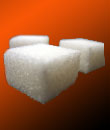 Pro-inflammatory Agent: Excessive sugar intake causes tooth decay and has been linked to increased risks of obesity, inflammation and chronic diseases such as
  Pro-inflammatory Agent: Common vegetable cooking oils used in many homes and restaurants have very high omega-6 fatty acids and dismally low omega-3 fats. A diet consisting of highly
  Pro-inflammatory Agent: Trans fatty acids are notorious for their double whammy effect: they increase the levels of ‘bad’ cholesterol, while lowering levels of the ‘good’ cholesterol. But that’s not all they can do. They have also been found to promote inflammation, obesity and resistance to insulin, laying the ground for degenerative illnesses to take place.
 Pro-inflammatory Agent: As much as 60% of the world’s population can’t digest milk. In fact, researchers think that being able to
  Pro-inflammatory Agent: Commercially produced meats are feed with grains like soy beans and corns, a diet that’s high in inflammatory omega-6 fatty acids but low in anti-inflammatory omega-3 fats. Due to the small and tight living environment, these animals also gain excess fat and end up with high saturated fats. Worse, to make them grow faster and prevent them from getting sick, they are also injected with hormones and fed with antibiotics. The result is one piece of meat which you and I shouldn’t be eating.
 Pro-inflammatory Agent: Researchers at the
 Pro-inflammatory Agent: Regular high consumption of alcohol has been known to cause irritation and inflammation of the esophagus, larynx (voice box) and liver. Over time, the chronic inflammation promotes tumor to grow and gives rise to cancer at the sites of repeated irritation.
 How about a cup of anti-aging and anti-inflammatory
  Pro-inflammatory Agent: A lot of the grains we eat nowadays are refined. They are devoid of fiber and vitamin B compared to unpolished and unrefined grains that still have the bran, germ and the aleurone layer intact. This makes refined grains as good as refined sugars, which are practically empty calories. And like refined sugars, refined grains have a higher glycemic index than unprocessed grains and when they are consistently consumed, can hasten the onset of degenerative diseases like
 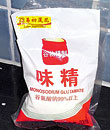 Pro-inflammatory Agent: Some artificial food additives like aspartame and monosodium glutamate (MSG) reportedly trigger inflammatory responses, especially in people who are already suffering from inflammatory conditions such as rheumatoid arthritis.
 Pro-inflammatory Agent: Why is this blank? Because it is meant for you to fill in with the food that you’re sensitive to. Many people are sensitive to certain food but are totally unaware about it. Unlike food allergy in which symptoms usually come fast and fiery, symptoms caused by food intolerance take a longer time to manifest. And when they do appear, they are often brushed off as common minor ailments such as tiredness and headaches. But repeated, long-term exposure to food that irritates can cause inflammation and lead to chronic diseases.