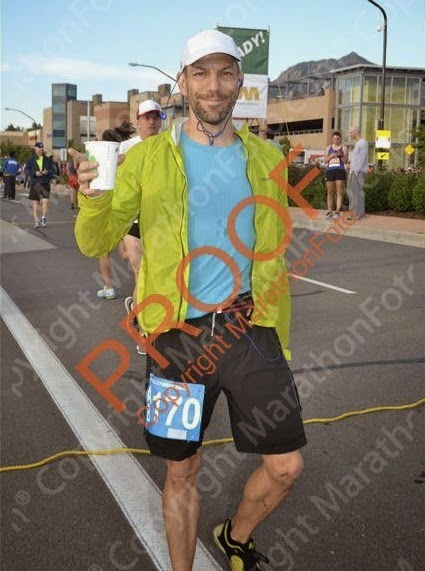
Showing posts with label born2run. Show all posts

Wednesday, November 26, 2014

Qualitative thoughts about running form

Built to Run: If you have been convinced by the science that upright-walking humans are formed over time to be the ultimate long distance running machines in dry hot weather.  If you have not heard this hypothesis and its supporting evidence, please click here.


Running Form: With a rudimentary understanding of human anatomy we can make some assumptions about the running form most conducive to our structure.  Some of the action verbs required to run:
  • Twist - the trunk 
  • Swing - legs/arms
  • Reach - reach in front and bhind
  • Absorb - landing, absorbing the momentum down loads the springs of the body 
  • Propel/Push-Off - propel over the landed foot, and extend legs, toe off.
Big to Small: Always tackle a problem big-to-small.  Working on the assumption that the biggest muscles need to bear the biggest loads.
  1. The glutes:
"The gluteus maximus is the largest muscle in the human body. It is large and powerful because it has the job of keeping the trunk of the body in an erect posture. It is the chief antigravity muscle that aids in walking up stairs."
The glutes do two things: keeps you from folding in half like a pocket knife and pushes your thigh from a raised position to a lowered position (sitting to standing).  If you have good upright, "hips-open" posture when running, you can dedicate this muscle group to absorbing and propelling the leg down and back.  If your posture is bad, you engage the glute to keep you from folding in half.  The glutes need to share their capacity to maintain your bad posture AND run.  The strongest movement of the glutes is pushing back - this is what propels you forward.  Try to fire this muscle when it contributes most.  The glutes are ~25% of your running muscles, make them do 25% of the work.  (25% pulled from the sky.)

   2.  The quads:

The next biggest cluster of muscles and cetrtainly the longest.  The Quads is an eccentric powerhouse, it absorbs your landing, turning all that downward momentum into stored energy.  The quads stops you from collapsing and in contraction straightens your leg.  It is the heel-cushioned running shoes that incorrectly allows you to straighten your leg WAY too soon.  Landing with knees slightly bent stored the most energy, straightening the leg should happen at push-off, firing simultaneously with the glutes.  It's the one-two punch of propulsion.  The quads are ~20% of your running muscles, make them do 20% of the work.  (20% pulled from the sky.)

  3. The trunk:

Twisting the trunk is often over looked.  We coach pitchers, batters, boxers, golfers, etc to originate motions in the hugely muscled trunk.  A perfect punch begins at the foot, twists the hips, twists the trunk extends the arm.  The arm is a messenger of the forces generated from the 'big boys' of the muscle groups.  Running is the inverse of that.  A trunk twist turns into a foot motion.  Twisting the trunk allows the reach portion of the running stride and extends the push off out the back.  The more the twist, the longer the stride (at the same cadence).  I think of the 'X' created by the shoulders and hips when I'm driving my knee forward and pushing out the back.  Arm swing exists only to engage this twisty spring mechanism.  The trunk is ~15% of your running muscles, make them do 15% of the work.  (15% pulled from the sky.)
4. The hamstrings
Next on the size-matters comparison is the hammies (I told you, conversational tone, this is no kinesiology class).  Hamstrings do the opposite of the quads, and fold the leg to make the knee drive easier.  The torque on the hip flexors during the swing phase is a function of leg weight AND leg length.  You can't lighten your leg, so make it shorter by folding it.  Engage hammies to bend the leg before (or syncopated) to leg swing forward.  This is why leg-swing-forward is referred to as knee-drive, not foot drive.  Hip flexors getting sore?  Try engaging hamstrings sooner! The hamstrings are ~12.5% of your running muscles, make them do 12.5% of the work.  (12.5% pulled from the sky.)

       5.  The gastroc chain

Shorten to 'the calf'.  Absorbs energy eccentrically allowing the heel to drop to the ground in a controlled manner.  Energy return happens at push off.  If you raise your heel with heel cushioning in your shoes then you're reducing the effectiveness of this energy return mechanism.  This is why people that transition to minimal shoes or barefoot in one day complain about calf soreness.  these > 1 inch heel raises in shoes limits the calf range of motion from 5-10%.  (reminder, if you see a '%' then the number is pulled from my rear, i meant he sky.)  The calf is not a muscle used to push the body in the air at push-off, it's relatively too small. Absorb, hold, return - it's due to fire at the end of the glute/quad firing and just before the hamstring folds your leg.  This phase in the running sequence is sometimes referred to as toe-off. Calves sore? Try lifting the foot with heel and forefoot at the same time - lift your foot flatfooted. The calves are ~7.5% of your running muscles, make them do 7.5% of the work.  (7.5% pulled from the sky.)
 6. The foot
Almost a copy paste from above, the foot muscle contribute a small but necessary component in the absorb/release phases.  Most important is that the foot is thought to contribute ZERO, so strap them to an unmoving slab of wood (eg 'supportive' shoe).  We ignorantly turn off any foot contributions by selecting the wrong shoes.  Let the arch load eccentrically and return it's share to the push off, that's what it's for!  The feets are ~5% of your running muscles, make them do 5% of the work.  (5% pulled from the sky.)

        7.  Others - supporting muscles that help (sometimes hinder) the balance and movements of these larger groups.  The shoulders, traps, glute medius, muscles for balancing, muscles for left-right (frontal plane) movements comprise the rest.

Summary: Asking too much from a smaller muscle group will limit your performance or distance quick!  Having an awareness of what's getting tired, sore or hurt will give you clues of what groups aren't pulling their weight.  Practice mindfullness with your runningfullness!  Remember, endurance isn't how hard a muscle can work - it's as much turning off the muscle groups when not in use.

Wednesday, August 20, 2014

How to Climb a Mountain

Maybe that should read 'why climb a mountain'.

When I did the Pikes Peak Marathon in 2013, I knew it would be ~6-7 minutes per mile slower than my road marathon pace.  This can be frustrating for a 'runner' where moving slower can seem like failure, in a way.  But if you fix effort level which can be measured by heart rate, an inclined run can turn into a walk and yield the same 160 bpm that a 7 minute/mile pace flat run can yield.

The PPM is an out and back, you get to see every runner.   It's amazing to see the range of human performance in that sample.  Some front-runners are **trucking** long strides, large broad jumps over obstacles - to - those that are doing a sort of zombie walk, leaning on rocks to catch their breath.  A  small handful of runners were heading back down the mountain having missed the cut offs at certain aid stations.

In 2013 my PPM training was convenient since I lived in Manitou Springs.  I could leave my house (on foot) and in 3 miles, I was on the Barr Trail.  For my weekly long runs, I practiced ascending to 8,000, then 9,000, etc etc until I reached the top.  I ascended the full summit 4 or 5 times before the PPM '13, taking the train back down.  I ascended by train and descended by foot a couple times.  Somehow the race went very poorly for me.  5 months of living in Colorado, the training runs, I expected to be 5:30, but it took me 6:48!  Poor estimates like this leave my wife waiting nervously at the finish line.

This year, I'd moved to Boulder training in 5,500-8,200 feet of elevation without taking a road trip.  Family/work life does lend itself to making trips to 14ers for true altitude training.  My training runs got ~20miles by late May (for the August race).  But in early June, on a business trip to Boston I tripped on a trail run and broke my toe - bad.  Cleanly, but non-displaced, fracture of intermediate metatarsal of my second toe.  This being my longest toe, any toe-off stage of gait re-stressed the fracture.  I had to be careful.  I took off the rest of June and most of July.  In my big come back I tried a 13mile sea level flat training run and I was hurting the next day(s).  Even shin splints, which I hadn't felt since my first attempts of running in 2009-10.  I was clicking off some nice 9 mile hilly runs by August.  No long runs, no altitude, but some signs of strength.

PPM 2014 arriving.  I discussed my plans for the race with my mom.  Getting someone who knows me so
Just don't trip, just don't trip
well, but doesn't understand the sport is ALWAYS helpful.  She said 'just don't trip'.  Such a simple statement and it rang in my head tap-tap-tap-just-don't trip-just-don't-trip-tap-tap-tap.  Thanks mom!  It worked, I didn't trip.  There is carnage after this race, much open wounds from many who fell!  I was not one of them.

My ascent felt great, I was walk/running watching my Heart Rate Monitor(HRM) occasionally.  NOT concerned with distance.  I tried to stay under 160, preferably 156 bpm.  I knew I could hold that for hours and hours.  In 2013 it took me just over 4hours to get up there (worse than most training runs).  PPM 2014 seemed all about restraint, I held that heart rate!  I passed person after person and ascended in 3:40.  Given my training I couldn't expect a better time, but it happened!

Is my camel-toe showing?
The turn around felt amazing, I was bounding and zig-zagging.  I thought I was making good time.  After a few miles down, I could feel the lack of volume in my training.  My muscles were tightening up even before mile 20.  Even on the less technical sections I felt like I was lucky to dip into ~10 minute/mile pace :(.  I felt the sting of people passing me.  'Just don't trip Just don't trip' kept working.  I saw people fall, people cramp up and limp off the course.  People that missed the time cut offs.  I felt ok with where I was.  I consumed ~4 scoops of Ucan Superstarch, 4 honey stinger gels, and a few handfuls of grapes (at aid stations).  For my effort level, it felt like I was perfectly sated.  Taking in 600 calories, and burning 4600 calories proves I'm pretty well fat-adapted.  A fat-burning machine?  ;).
Crossing finish line just a few minute past my goal.

Soaking my legs that would cramp  if I moved them too fast!


The final 1-1.5 miles on road surface I felt like a robot, and the finish I felt like smiling.  Temperatures reached 104 degrees in the sun on the descent.  I KNEW I'd lounge in the creek at the end.  I could feel it towards the end.


My Nathan Quickshot water bottle, Ultimate Direction AK Race vest, and Born2Run Trail Shoes worked flawlessly.

The details of my 'performance':

http://www.strava.com/activities/181738822

Saturday, June 14, 2014

A Surprising Personal Best

Been running for almost 5years now, in the early development of my running performance I am used to getting a new 'PR' (personal records) every race.  I noticed a trend of 10% improvement every 6months.
Note: when calculating % of time, use minutes not fractional hours.  For example, 10% of of 1.5 hours (90minues) is 9mins.
This is not sustainable indefinitely obviously.   The 10% figure will degrade and reverse over time.  But understanding the race specific work needed to improve a specific race distance takes specific training. No one gets faster without targeted effort.

Brings me to my situation, early 2013 we moved to Boulder.  I knew that in the mountains less pressure = less oxygen, any run out the door was hundreds or thousands feet of elevation change.  I was reacquainted with double digit-minute / mile times!  The only 6-min/mile times I'd seen were occasional asphalt downhill efforts.  May days of holding 6min pace for mile repeats seemed gone.

Now we are in Boulder and it seems the town gets very excited for the nation's ~2nd largest 10km race called the Bolder Boulder.  All of my runs this year are slogs uphill and careful descents, with occasional 7min pace downhills.  The day before the race, we came home early from a rained out camping trip and I said "if the Bolder Boulder isn't sold out, I will run it."

I jogged the 4miles from home to Pearl Street Mall and waited in line to see the registration was open.  I saw they were asking for seeding times.  Feverishly I search ath-links.com in line, I found a 10km race in Richmond in 2012.  That race has 16 feet of elevation change and it's at sea level!  I wondered if I could even repeat that performance at 5,500'!  The registration person put me in corral 'AB' (3rd fastest), the cut off time for 'AA' was 41:00 - missed by three seconds, ugh.  I knew I'd need people faster than me surrounding me to suck me in.

Split toe action
In the morning, I was trying to decide which shoes to wear.  I remembered all my speed work I used to do in my Born2Run Road shoes.  Fond memories of moving fast in these shoes that offer some medium-firm cushioning, but allowing toes to splay for longitudinal arch suspension in my stride.

I toe (split toe that is) the line and take off and was able to hang with all my fellow corral runners I picked runners to catch and pass my pass-to-was passed ratio was 50:1.  I was happy to fly by a group of 'A'-corral'ers dressed like superheroes.

Done already??
I was moving my legs at a pace I really hadn't tried since 2012.  I refused to look at my watch, not wanting to know my pace.  It buzzed every mile but did not look.

The entire race besides staying in a groove of breathing, I focussed on relaxing any muscle I didn't need.  Were my shoulders tight?  Yes? Why? relave them! and move on to the next muscle group.  Hands relaxed? No?.... etc.

At the mean 10% grade hill to enter the stadium I danced around another runner's puke and thought "their gut biome cannot process beans, they need to cut out legumes..." I crossed the finish line and was handed a "Sub-40minute badge along with my medal."  My heart soared (and sored a little too, haha).  I passed two more people puking with the thought: "I wish I'd worked hard enough to puke".  As a long distance runner I am SURE I had plenty of gas in the tank, it took 2-3 deep breaths to get heart rate down.  No soreness, tightness or other signs of fatigue as I drank my post race beer(s).

I cannot remember the last time I was pleasantly surprised by a race.  7th in my age group.

Inspired:  Now I'm interested in leaving my ultra-marathon shuffle and actually specifically training for a 10km.  Also I want to fly to Richmond to re-try that 2012 race!  I will bring these good luck charms.

Splits:
1    6:22
2    6:32
3    6:32
4    6:39
5    6:14
6    6:32
0.2 7:06

Note: this is a subject for another post, but less than 1% of the runners in those first few corral took any water or sports drinks.  

Tuesday, February 18, 2014

Snow and Ice Running Solutions

Been playing with screws in shoes, Kahtoola Microspikes and Yaktrax Runs.  My trails look like this (click here).

Summary: they each have their place.


1. The YakTrax Runs are very lightweight (lighter than the Kahtoola Microspikes) and easy to put on.  The strap that goes over the forefoot makes them very secure.  The first warning I got about Yaktrax was they may come off the forefoot, but this velcro strap fixes that.  (using them click here)
There are six carbide steel dull spikes in the forefoot area.  Three in each of two flat pads.  The directions tell you NOT to run on roads or rocks because you will tear these spikes out.  I have about 150 miles on mine and my spikes are bent, some are pushed flush in to the hard plastic.  I did not exactly follow the directions.  In my trails, when there's snow and ice there's STILL exposed rocks.  I think it'd need to snow many feet deep to cover the rocks in my area.  I thought they would be good in mud, but this pic will show the potential issues with that: 

The mud is caked and hides the spikes immediately.  The hard plastic pads have one more issue in my experience.  Just enough snow will get caught in those pads and freeze.  I notice this right away as it feels like there's an acorn in my shoe.  The frozen acorn-sized chunks of snow caught between the pads and my sole freeze and press in to the soft midfoot area.  I have to stop running regularly to clean out this compressed snow.  This is very difficult since my fingers are typically worthless at this point.  The springs along the middle and heel of the foot work GREAT and give me the traction I need.  I score these thusly:
  • six out of ten for effectiveness 
  • three out of ten for longevity
  • eight out of ten for ease of use
2.  Kahtoola MicroSpikes are sadly about as heavy as the thin minimalist shoes I wear.  I notice that I have them on and I am sure they weigh me down!  But the traction and ability to stay on and not need adjustment are unimproveable.  Again, only because I wear such thin shoes, the elastic on these is so strong it bends my toes up and my big toe can feel bruised after a few hours of wear.  I would not use these for an ultra race.  If your shoes are as thin as mine, be prepared to feel the spikes pushing back up into your feet.  This can take some getting used to if your feet are normally pampered.  

Stock photo:
These are a must have for frequent snow/ice runs.
  • eight out of ten for effectiveness 
  • eight out of ten for longevity
  • four out of ten for ease of use (dinged for being heavy and elastic hurting my little feetz)
3. Screw in the shoes - is a way to turn a pair of trail shoes in to a snow/ice biting tool.  Because the screws are in the sole, they won't come out easily so this solution is most likely to see pavement or concrete en route to your trail run.  I used my B2R Trail shoes for this since the stack height is sufficient for me running 3/8" teck screws in to the foot.  

The screw heads provide the bite into the ice and snow.  Not nearly as helpful in snow as the microspikes.  But their longevity and serviceability after hitting road surfaces and rocks is attractive to the do-it-yer'selfer.  The amount of added weight is negligible and the difference in feeling for my foot is slight.  Sometimes I swear I can feel the sharp point of a screw when I hit a rock 'just righ' (wrong).  But no foot damage or discomfort.  I could double the # of screws in the foot bed for more traction on ice, but I feel it'd get too slippery on harder surfaces.  
  • four out of ten for effectiveness 
  • five out of ten for longevity
  • nine out of ten for ease of use