Thursday, August 16, 2012

Polar RC3


This watch looks pretty awesome.  I've had such good luck with Garmin products that I feel some brand loyalty, but the price is right on this Polar device!   
Today Polar announced their new RC3 integrated GPS watch – the first fully integrated GPS watch coming from Polar.  This unit primarily targets runners with a bit of cycling, though it can also be used in some multi-sport scenarios.
And for clarification, here’s a quick refresher on similar sounding watches from Polar:
Polar RC3 = This watch, simplified running watch with integrated GPS Polar RCX3 = Simplified running watch (not GPS integrated, but supports G5 GPS pod) Polar RCX5 = Triathlon focused/advanced watch (not GPS integrated, but supports G5 GPS pod)


IMG_5954

"First Look" style review here

Wednesday, August 15, 2012

Crossover Gait

Just be more stable!  The first time I considered where (in relation to our hips) our feet should fall is while watching "Running the Sahara".  In this documentary, the elite, amazing runners complained that in running in the desert, they would frequently have to run in the tire track of the support vehicle.  That meant their feet would follow a narrow line and that was contrary to their normal running style.  That comment rang in my head while i'd run i'd purposely "straddle" sidewalk seams to ensure my feet landed below the hip sockets from whence they sprout.   

I know my efforts in a slightly wider landing led to my 5km PR - there are indisputable torsional benefits gained by not crossing over. 

Walk on a piece of string or along a seam in the concrete or walk on the lane dividing lines on your local high school or college track. What happens ? If you walk on a single line you will find yourself more unstable as compared to walking with a foot fall directly under your hips and knees the way it is supposed to occur. The limbs are a pendulum and economy and biomechanical efficiency as well as injury reduction will occur when the parts operate in the most effective manner.
We have all of our cross over runners, as you see her doing in the first half of this video before she corrects to anti-cross over (ie. natural), first walk on a line. In our case we use the metal drainage grate outside our office that you see in the video for just that purpose, they walk the grate. Then they run the grate. We ask them to feel ....... want to read the rest ? head over to our blog here for the entire article.

http://thegaitguys.tumblr.com/post/29486393822/the-cross-over-running-techniq...


Here are the other related cross over links here on youtube:
Part 1: http://youtu.be/LG-xLi2m5Rc
Part 2: http://youtu.be/WptxNrj2gCo
Part 3: http://youtu.be/oJ6ewQ8YUAA

^^Thanks Gait Guys for articulating what I had to learn the hard way :)


This Is America's Sugar Addiction - An Infographic

Nursing Your Sweet Tooth
Created by: www.OnlineNursingPrograms.com

Sunday, August 12, 2012

Improve Running Performance With CrossFit


Improve Running Performance With CrossFit

How to Balance CrossFit With Running

The tricky part is programming CrossFit workouts into your running schedule. Your goal should be to supplement your running with CrossFit workouts, not the other way around. Keep in mind that CrossFit’s motto is “not specializing;” the workouts are about being good at everything and not great at one thing.
This is why programming your CrossFit workouts remains incredibly important. You need to perform WODs that are metabolically relevant to running. Doing 5 sets of 1 rep of back squats with hopes of setting a personal record isn’t the right type of workout. But a WOD that involves rounds of 4 to 5 different exercises at a moderate weight will more closely resemble the energy system used in a 10K or half marathon. Throw out your junk mileage days and replace them with CrossFit workouts.
By incorporating CrossFit strategically into your weekly workout plan, you can reduce the volume of mileage and replace it with a strength-training day, done in a circuit style fashion, at an anaerobic pace. These workouts can be fun and beneficial, and will build the mental toughness and conditioning that will make you a better runner. One to two CrossFit workouts a week are all that you need, depending on your level of fitness and race goals.
CrossFit workouts will improve fitness for runners of all distances. If you are new to running or cross-training, or even if you are a veteran, start with one CrossFit workout a week for 4 to 6 weeks. As your fitness level progresses and your body adapts to the new stress, you can add an additional workout each week.
If your race goals are to have fun and finish the event, complete two CrossFit WODS a week. If you are an experienced runner or a novice and you are looking to set a personal record in an upcoming race, start with one CrossFit WOD per week; build up to two workouts a week.
If you’re training for a marathon, one CrossFit workout a week is all that is needed because the demands of marathon training require more rest. Four to six weeks before the race approaches, cut back to one WOD per week. This will allow your body to recover fully.

How to Manage High Volume and Intensity

There are two ways to improve your endurance: with low-intensity long runs and high-intensity intervals and cross-training. You do not want to limit yourself to only one way. CrossFit is high-intensity training that uses sprints, weights and gymnastics. Many running coaches and purists believe in high volume mileage training followed by intensity. Your training program needs both volume and intensity in running and cross-training.
The running off-season presents an opportunity to accomplish these needs. When you’re not training for a specific race and focusing on building base mileage, the amount of total weekly mileage should be higher and the volume of cross-training workouts should total two per week.
Keep in mind that there are dangers that could result from high volume and high intensity in both running and cross-training. Overuse injuries to bones, tendons and joints, and general fatigue symptoms are common problems that come with hard training. Learn to read your body—our bodies give us warning signs, so listen to them. Lower your mileage, cut out, or cut back on the CrossFit WODs as necessary. It is always better to miss a week of training rather than a month or more because of an injury.
Many runners and coaches will not agree with me, but don’t be afraid to give CrossFit a try. Done correctly and planned properly, your running performance will improve.

Friday, August 10, 2012

B2R Shoes, yay! (First Look)

I was happy when my former running coach, Eric Orton, said he had a line of shoes coming out.  Eric taught me the importance of cadence, running economy, running-specific leg, core and glute strength (in other words, everything I know).   I am all ears when Eric suggests a shoe, so him 'making' a shoe! Even better!  <<--in summary, I had high expectations.  

The first Born2Run shoe is road shoe available in red or flourescent yellow.  The zero drop (0mm heel to midfoot differential) has become a requirement for running shoes for me.  The shoe is very lightweight at about 7ounces, comparable to Merrells or the latest Vibrams.  When I saw the stack height I feared there would be little ground feel.  The split toe, or cloven sole, seemed novel.  I have Vibram five fingers and Zem Gears so I'm no stranger to having things between my toes.  


Image and video hosting by TinyPic
I chose a true to size for me.  Sizing is a little bit of a science to me.  It's not about where your toe lands in the front of the shoe, it's about lining up the flexible part of the shoe with the flexible part of your foot <see pic>.  My toes' bend lines up with the natural bend in the shoe (as measured from the heel) perfectly.  <In summary the distance from your heel to your toes' hinge point should match the hinge point of the shoe>.  Fortunately, in this case, this shoe is flexible enough that if you're off a bit it won't matter.  

Putting the shoe on I first noticed how thin the material between my toe was!  It was unnoticeable.  As is explained repeatedly on mobilitywod.com, the gap between my big toe and the rest of my toes gets bigger as my feet get stronger - the cloven shoe helps with that.  Some people with weaknesses or tightly crammed toes may not find this as natural a fit as I did.  I then noticed even though the stack height is tall, the material is thin enough that I had great ground feel.  I could tell if I was standing on a quarter.  The shoe comes with two pairs of tabi socks, so i paired them together.  I then tried my injinji toe socks and found them to also be a great fit, unobtrusive even.  

My first day of wearing them, I took them though a crossfit workout that included box jumps, rope climbs, weightlifting, and running with weights.  The shoe performed very well and didn't slip when sweaty. In fact, the upper gripped the rope well!  The shoe also gave good lateral stability and didn't roll across my foot the way Softstar runamocs, or Zem Gears do for such workouts.

So far I have run in them on paved trails, roads, sidewalks and track for 5-9 mile runs.  My feet felt a little tight post-run; I think I'm calling upon more foot muscles with these shoes than I need for my Merrell trail gloves.  Whenever I feel sore, I'll change shoes the next day and swap back and forth.  I haven't needed to do that in my B2Rs.  I've ran with them for 4 days in a row and counting, hill repeats, hard intervals, recovery.  All good!  

Fit, ground feel, flexibility are all A+.  No seams inside to annoy me, achilles tendon guard is low and flexible.  Can not be improved.  My two tiny complaints: 
Image and video hosting by TinyPic

a.) my laptop cable has once gotten caught in between the toe seam! I took a couple steps and yanked the cord out (thank goodness it was a Mac - magnetic connector!)


b.) this little liner at the bottom worked its way out of the shoe as I ran! <see pic> it was travelling up my heel during my speed workout day.  Funny that i'll blame the shoe, although it's probably my form - my problem!  ;)

I look forward to beating these shoes up some more and talking more about their longevity. 

Below is a quick, unnarrated vid showing the difference in heft and flexibility between the Brooks True Grit and the B2R Road shoe.  Notice the True Grit's split toe is really artificial, just a slice in the tread.  


Monday, August 6, 2012

Gluteus Medius: Weak buttocks ruin the runner


Gluteus Medius: Weak buttocks ruin the runner

Gluteus medius weakness, Sean Fyfe says, is a likely culprit in many overuse injuries
The gluteus medius should be considered in every running injury. So many athletes with running overuse injuries of the lower limb present with poor gluteus medius function that I have come to the view that the strength and function of this muscle is probably the most important active component in the achievement of a biomechanically efficient running technique. This is not so surprising when you consider that during running you are always either completely in the air or dynamically balanced on one leg. All sports injury practitioners should, I believe, be able to assess and retrain gluteus medius function.
The gluteus medius muscle originates at the dorsal ilium below the iliac crest and inserts at the top outside surfaces of the greater trochanter. It is the major abductor of the thigh. The anterior fibres rotate the hip internally and the posterior fibres rotate externally. The muscle is innervated by the superior gluteal nerve (L4, L5, S1) and gains its blood supply via the superior gluteal artery.
During closed kinetic chain actions, such as the stance phase of running, the normal role of gluteus medius as a mover muscle is reversed, causing it to act as a pelvic stabiliser. So, for instance, during right stance phase, the muscle contracts to slow the downward motion of the left side of the pelvis so that the pelvis doesn’t tilt more than seven to eight degrees from parallel to the ground. If the gluteus medius is not functioning well enough to achieve this control, the athlete is said to have a ‘Trendelenburg gait’. Often, but not always, you may see the same weakness in walking (producing a waddling motion or, in extremis, a limp), and the dysfunction will then be more marked when they run.
The therapist should analyse the function of gluteus medius dynamically and manually. This is not easy. The assessor must be properly alert to the adaptations to running technique that an athlete can adopt to offload a weak or fatigued gluteus medius muscle. To scrutinise the dynamic function accurately, you will need to use video analysis.

Wednesday, July 25, 2012

Dairy, Required for Kids?

It is very strange that 25% of Americans have an issue with dairy and it's considered mandatory, but why?  Calcium, right?  But of course there's no thought about it being usable by humans.  To test if you tolerate dairy- avoid it for 30days and then reintroduce it.  But do so slowly, starting with a week of daily cheese intake, then milk.  Give it a try!  Now for our article, from here:
The war on milk has shifted fronts. First it was sugar-laden chocolate milk, which parents and school administrators battled in recent years to remove from school-lunch menus. Now, it’s plain old moo that’s under fire. 
On Thursday, a national doctors group petitioned the U.S. government to remove milk as a required food group from the National School Lunch Program, the federally assisted program that has provided lunch to millions of public school kids since 1946. The doctors’ reasoning: milk doesn’t help protect kids’ bones. 
The promotion of milk to help build strong bones in kids is, “in effect, the promotion of an ineffective placebo,” writes the Physicians Committee for Responsible Medicine (PCRM) in its petition [PDF]. “Milk is high in sugar, high in fat and high in animal protein” — all of which counters its purported benefits to bone health, the committee argues. 
The PCRM notes that dairy products, including milk, are the No. 1 source of saturated fat in Americans’ diets. Drinking milk for the calcium it contains is therefore a losing strategy, especially since people can get their daily recommended calcium from other, more nutritious foods. And for millions of Americans who are allergic to milk — including 1.3 million children — or intolerant to the lactose it contains, drinking milk carries potentially severe health risks. 
 “Research has now made it abundantly clear that milk doesn’t build strong bones. Whether we are talking about children who are forming bones or older people who are trying to keep their bone integrity, milk doesn’t have a beneficial effect on either one.” 
In March, a study published in the Archives of Pediatrics & Adolescent Medicine followed a group of 6,712 girls over seven years, tracking their diets and assessing their likelihood of stress fracture. The researchers found that neither calcium nor dairy intake was associated with a lower risk of such fractures. Similarly, 2003 data from the Nurses’ Health Study, which followed more than 72,000 postmenopausal women for 18 years, found that milk drinkers were no less likely to suffer a hip fracture than those who didn’t drink the white stuff.

Friday, July 20, 2012

Take Control of Your Cadence

You need to be the boss of YOUR cadence, don't let it be controlled by someone that's not you! I noticed sites like these (Link Here) are popping up to sell you songs in an effort to better control your running.  Their web site claims this:  


_________________________________________________________________________________
Header Technical

Linking BPM to Running Speed


How to work out which BPM to choose: The run2rhythm program is essentially coupling running cadence to music.
With running, very few people can sustain a steady rhythmic pace over an extended period. Many tend to start too fast and don’t get to finish the distance intended, or within the time targeted for the run. The run may not last as long as they intended…..”puffed out early!”


Outdoor running:

  1. Run for 15 minutes at a pace you are comfortable with
  2. If you are starting out this will be slower than if you are a conditioned runner.
  3. During that run count your steps for 1 minute. Do this several times to get an average.
  4. Then, refer to the chart below to determine the BPM you should choose.
________________________________________________________________________________


I think in their description they're smearing cadence (steps per minute) and running speed.  In a car you've got tachometer and speedometer, tach measure cadence of engine, speedo is mph of vehicle.  Like running in place is steps / min and 0 mph.  To extend my analogy too far ... a pump is an engine (like a car engine) that runs at one rpm all day.  A pump's engine's rpm was chosen to be at it's peak efficiency.  Running is much the same way.  There is little reason to deviate at ALL from YOUR personal efficient cadence when endurance running.  


What is 'my' natural cadence?  My resonance?  Well it depends, but not by much!  You can experiment by just hopping in place (two foot hops to start with) like you're jump roping. Start out springing up once a second.  You'll notice that's so slow that the spring energy you loaded on your tendons dissipates before your next hop.  Try two hops per second boing-boing-boing, you should notice that some energy is stored then released to help you spring back up.  As a boundary condition try hopping as fast as you can.  It's WORK!  A typical figure to work with is 180 steps per minute (aka 90 strides per minute).  If you want to synch that up to music or an audio metronome (many apps available for phones, or search metronome on amazon.com).  


I treat 180 spm as a MINIMUM.  If you're running there is no good reason to allow that stored elastic energy to dissipate, use it for your next stride and it doesn't hang around long!  ;).  An interesting test is to search for your maximum.  Fun thing to try at a track, do a series of 200m with rests each one increase a few strides per minute.  After 205-210 it's really hard to keep up.  What's your max?


Note: if you are synching up to music or beats, treat each beat as a foot LIFT, (not foot fall) otherwise you'll find yourself planting your foot unnaturally hard.  


Enjoy and let us know how it goes!

Tuesday, July 10, 2012

Mental Challenges in Running Far

Like me, are you a little inspired by seeing improvement?  Running, weightlifting, your career, shit anything?


I have been pretty good about figuring out "what limited me last time?" - and assessment of my shortcomings in hopes of reducing limitations.  Might be a tough shortcoming to surmount - like, "well in that last race I was out of breath!!" - ok, a few MONTHS of cardio base building should remedy that.  Certainly a tall order.


My first few races (talked in to running by friends with decades of experience and me with NONE) usually ended like this.


As I 'jumped' in to the sport, injuries seemed to plague my running, but this was finally remedied by awareness, practice and implementation of good running form.  Strength building outside of running prepared my body for the unforeseen.  Nothing gets you ready for tripping in the woods like deadlifts in the gym!!

As my races got longer, I've been limited by temperature regulation, fatigue or nutrition, etc.  Each of which comes with valuable lessons learned.   BUT I then hit a new 'weakness' or 'limiter' - the brain.   Chasing around the commands of a brain that seemed not always to have my goals aligned with its own has been an interesting ride!  One of the indicators I knew it was my mind was:  
You're trudging up a hill, it's so steep that you better walk it.  After you peaked the hill and it's flat, then downhill smooth you snap out of a trance-like state and ask yourself "why am I still walking!>!?!?!1!? Then you do the checklist, breathing=idle, muscles=unfatigued, heart rate=idle... well get back to WORK!  this is a RACE!"
I have these conversations periodically with myself.  Here's some ways to overcome your own brain (aka mental fatigue):


1. You Are Lucky

I begin with this strategy because I use it most frequently and believe it produces the most empowering results. When I’m not enjoying myself during a long run, I turn it around by reminding myself that I am so, so fortunate to be out there.
So many individuals will never have the chance to explore the remote mountains, meadows, ridges, and lakes that we see during ultras. Some are physically unfit, others saddled with injuries, and others grappling with life circumstances that make distance running impossible.
During your worst moments of any ultra, tell yourself these words: “I am lucky. I paid money to do this. I am in one of the most beautiful places on earth, and I’m one of the fortunate few able to experience it.”
It works for me.
2. Break Down the Numbers
Looking at the numbers during an ultra can either provide a sudden boost or instant frustration. To assure it’s the former, I turn the numbers into something positive. I try to never, ever look at a mile marker and think, “I’ve only come this far?” Inevitably, that mental process makes me feel discouraged and weary. Instead, I say, “Only seven more miles to the next aid station!” or “I’ve already finished one-third of the race!”
I break down the race into manageable bits, but look at my progress in a positive way.
3. Reward  
Exercise is all about reward, in my book. I think about the slice of watermelon waiting for me at the next aid station, or the hamburger I’ll get to devour at the finish line. If my stomach isn’t feeling so hot, I’ll change it up to “Only 10 more miles till I get to change my socks” or even “20 more minutes and I’ll get a burst of energy from the Gu in my pocket.” Looking forward to the next small thing on a long run helps keep me going.
4. Distract:  When all else fails, I try to forget that I’m running. I do many of my races with my running partner, Caroline, and we spend hours catching up on work, family, rowing (me), triathlons (Caroline), and any other topic of conversation we can think of. If I don’t feel like talking, I listen to music on my iPod. A favorite song perks me up right away and makes me forget about the long, laborious trail ahead. 

Any others?  


Friday, July 6, 2012

The Men Who Made Us Fat

4 Part Series on Youtube explaining why obesity is now considered a disease, where it's going.

"this is the American meal: beef fed on corn, bread made with corn syrup to make it last longer, fries fried in corn oil, catsup made with corn syrup, soda sweetened with corn syrup.  a direct link between the overproduction of corn in the 70s and the overproduction of food today."


Thursday, June 28, 2012

Running in the Heat

An old article from girlinmotion.com: (all in Fahrenheit)


Note: weatherunderground.com is a good place to check the day's dewpoint, it's not listed in all weather sites and apps!  

I wanted to share this great bit of info I found on a RW training forum, it was written by a runner who is also a meteorologist.  By adding the temperature and dewpoint, you get an idea of whether your run/race will suck or not: 
Temp+dewpoint of 90-100 is probably ideal, but anything below 130 is pretty much OK to go for the fast time…maybe 120 for longer distances…say 1/2 marathon or above. Between 130-150 will see a gradual slowdown in pace, and if it’s above 150, forget pace altogether and just focus on finishing. 
Here’s another poster’s way of looking at it (that the meteorologist agreed with):
Dewpoint <55*F: Go for it!Dewpoint in the 60s…it’ll be tough for racing, training runs OKDewpoint in the low 70s…hard training will be toughDewpoint in the upper 70s….anything other than a recovery run will be a struggleDewpoint in the 80s…even a recovery run is tough


This approach is good science, for it considers the cooling effects of sweat.  You can't cool off without evaporation of sweat, and sweat won't evaporate in the air is saturated with water.  Also % humidity is a number we think of when calculating the heat index of a day, but humidity comes from dew point.  


and... for my run home today, temp = 97deg, and dew point is 60deg = ugh.  

Wednesday, June 27, 2012

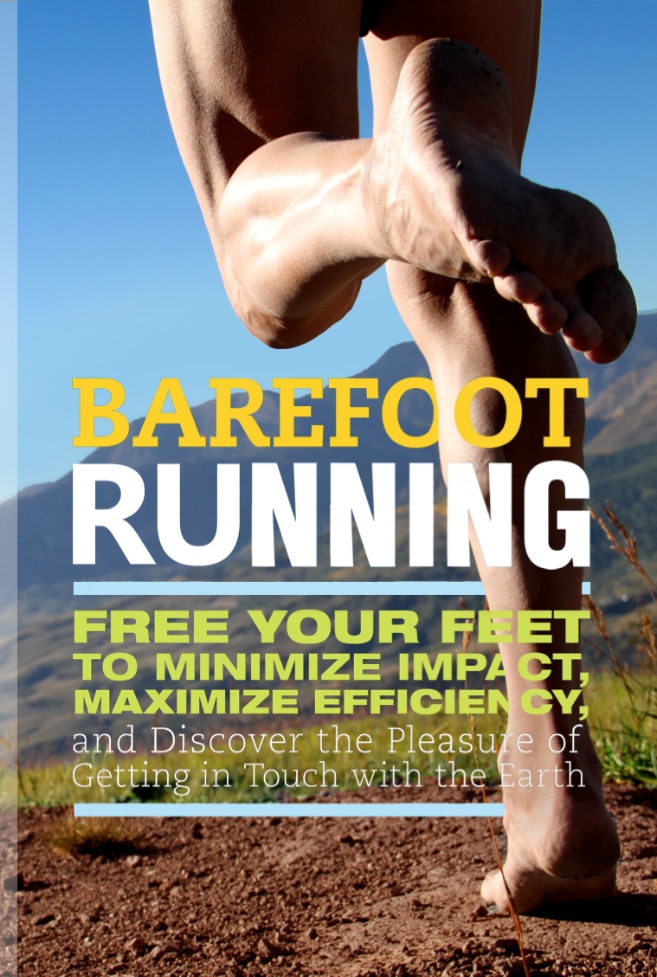
Barefoot Running, The Movie


Good stuff: From Michael at runbare.com
My wife Jessica and I have been working feverishly on a barefoot running movie which will be out at the end of August. We think this will help propel barefoot running forward in popularity. People always say they need to “see it to believe it," so we're showing them how easy, fun and exciting fun it can be. So we made a fun and exciting movie, to help share the joy of running bare with the world! We’ll have a trailer out this week, and wanted to see if you could post or write about it. We’ll also have a review copy out of the movie (in DVD or download) in the next few weeks and are happy to get it to you for review. We think you’ll love it! We sampled a few instructional videos, especially those related to running and weren't too inspired. We challenged ourselves to create a video that would surpass all other how-to videos and stand the test of time, viewed again and again, instead of collecting dust on a shelf. So, we melded personal stories with stunning running montages and instructional pieces. It took 9 months of filming and editing on one of the most beautiful places on earth, Maui, to make the most drop-dead gorgeous movie we could. It’s 70 minutes, 17 chapters, filled with amazing running, scenery, and entertaining lessons about barefoot running. It’s also filled with great music (which was harder to come by then the footage itself!). We joke and call the movie a cross between a Warren Miller skiing movie and a Chi Running DVD. We think you’ll love it! Topics include everything from the basics, to warming up, pad-development, to technique for different terrain, proper form, drills, stretching, recovery, tons of running on the road as well as the trails, plus connecting with nature, reawakening your senses, and even a special section for women and barefoot running. (For more on chapter selections visit here: http://www.runbare.com/barefoot-running-DVD-chapters. (Final cover design and chapter order are subject to change.) So let us know if you’d like us to get you the trailer and thanks in advance! (As an aside, if we could figure out how to navigate the FB rules and do a DVD giveaway for the groups I'm up for suggestions).
 I hope you’re well and the running’s going great! With best wishes, Michael


Monday, June 25, 2012

Remember those shoes we spent 30 years telling you to buy? Never mind.


Runner’s World: Remember those shoes we spent 30 years telling you to buy? Never mind.

by CHRISTOPHER on JUNE 24, 2012
In Dec. 2008, Runner’s World slipped this footnote into its shoe review:
We’ve reported in the past that a more stable shoe will help relieve the pain you feel just ahead of the heel. But recent research has shown that stability shoes are unlikely to relieve plantar fasciitis and may even exacerbate the symptoms.
Translation: “Those $100 shoes we’ve been telling you to buy for years? Turns out they’re worse than worthless.”
RW’s excuse is the same one Citigroup and Countrywide and Fannie Mae deployed as it tried to scuttle away from the subprime mortgage crisis: “No one could have seen this coming. We acted as soon as we got the information.”
That’s not an alibi, of course; it’s an indictment. They pretended they were experts — and cashed in on that authority of expertise — when in truth, they didn’t know what they were talking about.
Now, Runner’s World is slipping in another correction. In the March, 2012 issue, it began slinking away from the once hugely-profitable, and now discredited, “motion-control” shoe. They did it so quietly I missed it, even though I’d been shocked to hear RW’s shoe reviewer, Warren Greene, hint as much at a seminar more than a year ago.
Barefoot in Arizona has the story, including this bullseye analysis:
why do so many people believe they need pronation-controlling posts to run but no one believes they need Reebok Pumps to play basketball? It isn’t because the runners were convinced by studies showing the benefits of motion-control shoes, because they aren’t any. It’s because two generations of runners have been told they need them by the only major source of independent shoe reviews.
Incidentally, this major source of “independent” shoe reviews has NEVERpublished a negative review — not, at least, since Nike temporarily pulled its advertising back in the ’80s. As Runner’s World’s founder laments, the shoe review he’d created as a form of consumer protection is now “a grading system where you can only get an A.”

Friday, June 22, 2012

PALEO BANANA BREAD


A READER RECIPE: PALEO BANANA BREAD

If you're a Paleo diet devotee, then you'll love this recipe for Paleo banana bread from FitSugar reader AllieNic.

Too Good Paleo Banana Bread
Ingredients:
3 very ripe bananas
5 Medjool dates
5 Tbsp warm water
3 eggs
2 cups almond flour
1/4 cup coconut oil
1 tbsp coconut flour
1 tsp cinnamon
1 1/2 tsp vanilla extract
1 tsp baking soda
1/2 tsp sea salt
Unsweetened coconut flakes for sprinkling
Read on for the rest of the recipe!
Directions:
  1. Preheat the oven to 350 F and line a bread pan with parchment paper.
  2. In your food processor, combine the dates and warm water. Make sure to pit your dates first, or else this step will make a lot of noise and be very frustrating. Process until you have formed a nice date paste. Add the bananas and vanilla and process until just combined.
  3. Pour the banana mix into a bowl and add your coconut oil, and eggs — mix until evenly distributed.
  4. In a small bowl, combine all dry ingredients. Gradually add the dry ingredients to the wet while constantly stirring.
  5. Pour the batter into the bread pan and sprinkle some coconut flakes on top for garnish.
  6. Bake for 45 to 50 minutes or until edges have browned and a toothpick inserted in the center comes out clean.
  7. Cool on a wire rack, and enjoy with some pastured butter on top!

Thursday, June 21, 2012

Paleo Diet and Multiple Sclerosis

Untested standard american diet (S.A.D.).  You want a clinical trial on the SAD?  try 40% obesity, 2:3 type 2 diabetes sufferers, and 3.5million americans seeking fertility assistance.  


Mimic a Hunter Gatherer diet and protect the brain and the body.  Dr. Terry Wahls learned how to properly fuel her body. Using the lessons she learned at the subcellular level, she used diet to cure her MS and get out of her wheelchair.


Reverse Global Warming Through Livestock

Monday, June 18, 2012

OneGood Earphone Review


Repost from here: http://barefootinclined.blogspot.com/2012/06/listen-up-far-end-gear-onegood-earphone.html


Listen up! Far End Gear - OneGood Earphone Review


I seldom have used ear buds when running, especially since I've started trail running much more. Generally, I don't need the distraction, and I like to be able to hear my surroundings for safety reasons.

However, I recently had the opportunity to try out the OneGood earphone from Far End Gear.  What is great about the XDU single earphone, is that it combines stereo sound into one ear bud, leaving your other ear available to hear surrounding sounds etc.

Here are some of the specs/details from the Far End Gear site on the noise-isolating earbud:


  • *Now Gold-Plated* Stereo 3.5mm right angle plug (same as 1/8-inch size plug)
  • Includes 3 sizes of rubber ear tips, to find your best fit
  • Compatible with Apple iPods, Apple iPhone, Sony MP3 Players, Laptops and Desktop Computers, as well as Sansa, Creative, Etek, Ativa, RCA and other low-cost MP3 players
  • Works with any device that accepts a stereo or mono 1/8-inch (1/8") or 3.5mm plug
  • Weighs in at 0.3 ounces (8 grams)
  • Stereo plug's circuitry mixes both stereo channels (left and right) together into one earphone
  • 42 inch long cord

I also tried out the BuDLoks, which are motion-resistant eartips that fit over most earbuds. The idea is to provide a stable, soft-silicone holder for your earbuds to help secure them better when active. 


Initially, I tried the earbud by itself, and it actually fit quite comfortably.  There are three sizes of ear tips, so they should fit most people well.  I liked the noise isolating sound in one ear, and the quality was decent.  I did try out the BuDLokS also, and they too fit very comfortably, however the trade-off was losing some of the noise isolation and sound quality.  Since the standard earbud stayed put while running, I've been using that primarily. 

As I noted the sound quality was pretty good for music, however I really liked them for listening to podcasts etc.  I wore the earbud on my first 2.5 hour trail run, and listened to theTrail Runner Nation podcasts... that worked out really well.  I learned a lot, and was still able to be aware of my surroundings (bears, mountain lions etc.. ;-)  ).

While the OneGood Earphone is not going to compete with higher-end dual earbud systems as far as sound quality for music goes, for purposes of running or anything active, they provide an ideal way to listen to music or podcasts safely on the road or trail. 

At $19.95, they are a terrific value, and Far End Gear also offers a variety of other models, including ones with mics to use with your iPhone etc. If you love to run with your music or podcasts, Far End Gear offers the best way to do it safely. 

Happy Trails!

Jeff